- Power outages are becoming more common as grid congestion increases, making energy resilience a growing priority for farms.
- Even short interruptions can disrupt critical systems, which is why being able to keep your farm running during an outage matters.
- Combining solar, a small wind turbine, and battery storage creates local power that works around the clock, across all seasons.
- A complete on-site energy system helps you use more of your own electricity, reduce grid dependence, and stay in control when it counts.
Power outages are no longer a rarity in the Netherlands. As electricity demand grows and the grid becomes increasingly congested, interruptions are becoming more common, especially in rural areas where capacity is already under pressure.
When the power goes out on your farm, it’s more than an inconvenience. Ventilation systems stop. Milking robots go offline. Cooling and feeding processes are interrupted. Even short outages can disrupt operations, while longer ones create real financial and animal welfare risks.
So, with that in mind, the pressing question for farmers becomes: what do you do when the power goes out on the farm?
Quick fixes can provide short-term relief. But if you want real resilience, you need an energy setup that gives you control over your own electricity. That way, you won’t be relying entirely on a grid that is becoming more crowded by the month.
In this article, we’ll explain why power outages are becoming more common, how long they typically last, and how a complete wind-solar-storage system helps farms stay energy-secure – 24/7, all year round.
Are power outages becoming more common in the Netherlands?
Let’s cut to the chase: Yes. The electricity grid is under growing pressure, which increases the risk of outages.
Demand for electricity transport capacity is rising quickly, and, in many regions, the grid is already full. Netbeheer Nederland reports that many businesses are waiting for new or upgraded connections because there simply isn’t enough available capacity.
More areas now face overload risks, where electricity consumption and feed-in exceed what the network can safely handle. TenneT has warned of possible connection stops in parts of Flevoland, Gelderland, and Utrecht if strong measures are not taken.
The impact is measurable. In 2024, the Netherlands recorded more than 27,000 power outages, around 17% above the five-year average. About 2.4% of customers were affected.
Add extreme weather and a network that is being upgraded while still in full use, and it’s no wonder interruptions are growing steadily.
For farms, the effects are often felt first. Rural locations are typically further from major substations and have fewer alternative routes in the network. That makes agricultural businesses more sensitive to maintenance work, grid congestion, and unexpected failures.
Before you worry too much: the Dutch grid is still reliable. But it is being pushed harder than ever, so it’s worth thinking ahead about how your farm handles outages.
How long does a power outage usually last?
In most cases, a power outage in the Netherlands is resolved within a few hours. Unplanned disruptions lasted around 70 minutes on average in 2024. Planned outages for grid maintenance took longer, almost four hours on average.
That sounds manageable. And often, it is.
But averages don’t tell the full story. Regional faults, severe weather, or technical failures can extend restoration times. And even a short interruption, especially an unplanned one, can disrupt critical systems on a farm.
If ventilation stops, animals are at risk. If a milking robot shuts down, routines are interrupted. Cooling systems, feeding installations, and automated doors all depend on stable electricity. In dairy farming especially, a 24-hour outage would have serious consequences for animal welfare and production continuity.
That’s why it helps to make sure your farm can keep running during an outage, even if most disruptions are short.
What to do when the power goes out on your farm
Over the years, we’ve seen the same pattern across farms we work with: when the power drops, having a few clear steps makes all the difference.
Here’s how our partner farmers typically handle it.

Step 1: Check the scope of the outage
They start by finding out whether the problem is local or affecting the wider area. Most check their grid operator’s outage map, their energy supplier’s app, or nearby farms and businesses. If it’s regional, they know to prepare for a longer interruption.

Step 2: Secure essential operations
Next, they focus on the systems that matter most for animals and production:
- Ventilation
- Cooling and refrigeration
- Feeding installations
- Milking robots and automation
They also take a quick look at what can be switched off, whether start-up peaks might overload backup systems, and if sensitive equipment is protected when power comes back.

Step 3: Activate backup where available
If there’s a generator or battery in place, they make sure it kicks in properly and delivers enough power for critical processes. Fuel levels or battery capacity get checked right away.
| Featured solution |
|
Don’t have a battery solution yet? >>> Explore our energy storage systems and see how you can keep more of your own power on site when it matters most. |

Step 4: Stabilize and prepare for a longer outage
Once essentials are running, they:
- Reduce non-critical electricity use
- Keep an eye on animal comfort and cooling
- Prepare for manual work if automation stays offline

Step 5: Create a basic action plan for next time
After power is restored, the best-prepared farms take a moment to get ready for next time:
- They list critical systems and their power needs
- Decide who does what during an outage
- Check whether backup capacity is sufficient
- Test their emergency setup regularly
Emergency actions matter in the moment. A simple action plan lets you respond faster and with more confidence next time.
And one thing we see again and again: even the best plan still depends on having energy available.
That’s why many farms are moving beyond emergency measures and toward a complete on-site energy setup, one that continues delivering power even when the grid doesn’t.
How a complete energy system keeps your farm running during power outages
A single technology rarely solves energy security on its own. Real resilience comes from combining energy generation and storage into one system that works together.
On farms, that usually means three components:
-
Solar panels for daytime production
-
A small wind turbine for night-time and winter generation
-
A battery to store surplus energy and provide instant backup
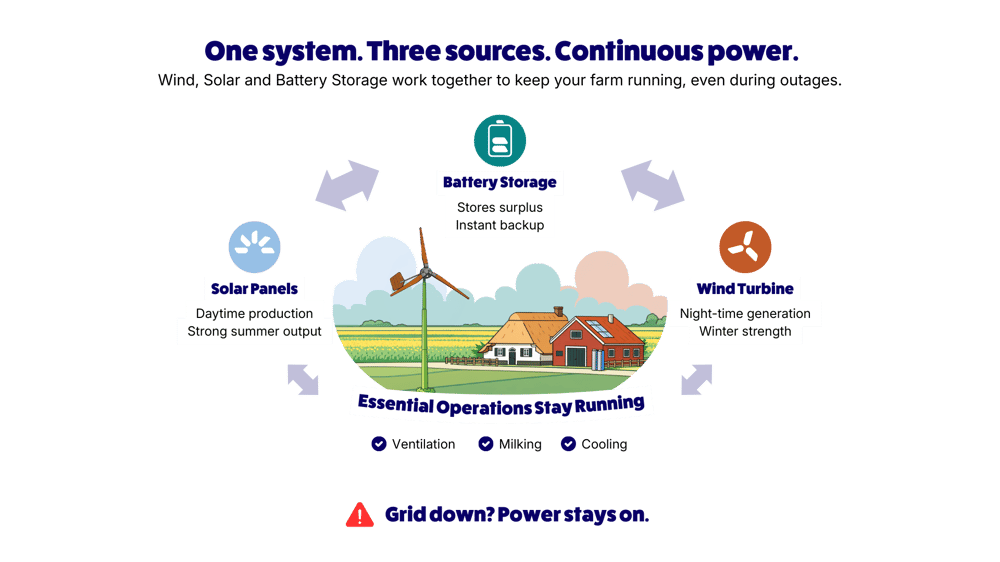
Each plays a different role. Together, they create local power that keeps essential operations running, even when the grid fails.
Let’s break down how each part contributes.
Wind fills the gaps left by solar
Solar panels do most of their work during the day and peak in summer. A small wind turbine complements that by producing electricity when the sun isn’t shining, often at night and during autumn and winter.
For farms, this creates a more balanced energy supply across seasons and around the clock, instead of relying on one source.
| Featured solution |
|
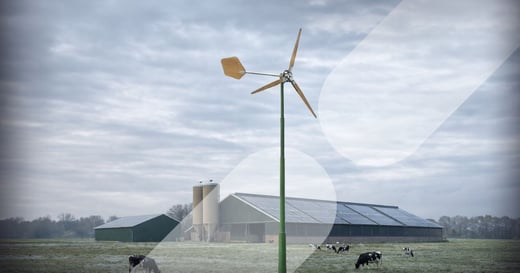
An EAZ wind turbine with a 15-metre mast and a capacity of 15 kW can make a real difference. In combination with battery storage, it helps keep your farm running when the power unexpectedly goes out. |
The battery absorbs peaks and covers downtime
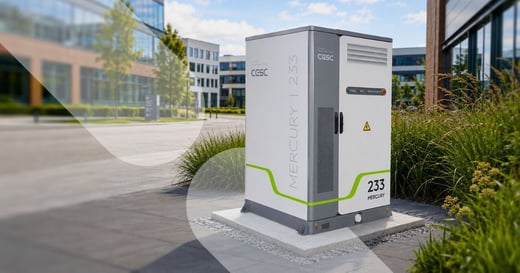
A battery stores surplus energy generated on site, allowing you to access it when needed.
During an outage, it delivers power immediately, leaving you with no wait-time or manual start-up. In everyday use, it helps smooth peaks in consumption and keeps more of your own energy available for later, instead of sending it back to the grid.
Solar panels deliver strong summer production
Solar panels provide high output during daylight hours, covering a large share of your daily energy needs in spring and summer.
They reduce how much electricity you need to buy from the grid and form the backbone of on-site generation for many farms.
Together, they provide continuous base power
Each system plays a different role. Combined, they deliver energy day and night, in summer and winter.
Wind and solar generate. The battery stores and stabilizes. Together, they create a continuous base supply that keeps essential farm operations running and gives you greater control over your own energy.
FAQ: Power outages on farms
Are power outages becoming more common in the Netherlands?
Yes. Grid congestion is increasing across many regions, and electricity demand continues to grow. In 2024 alone, the Netherlands recorded over 27,000 outages, around 17% above the five-year average.
How long does a typical power outage last in the Netherlands?
Unplanned outages lasted about 70 minutes on average in 2024. Planned outages for grid works took closer to four hours, but regional faults or extreme weather can extend this.
What should I do first when the power goes out on my farm?
Check whether the outage is local or regional, then secure critical systems like ventilation, cooling, feeding, and milking. If you have backup power, make sure it activates correctly and supports essential operations.
Is a generator enough to protect my farm?
Generators can help, but they depend on fuel, manual checks, and regular testing. A combined system with wind, solar, and battery storage provides automatic backup and keeps energy available without waiting for power to return.
How does a small wind turbine help during a power outage?
A small wind turbine built for farmers keeps producing electricity when the sun isn’t shining, often at night and in winter. Combined with a battery, it helps maintain local power on your farm even when the grid goes down.
The takeaway: how to stay in control of your energy
Power outages are becoming harder to ignore. Grid congestion is increasing, demand is rising, and even short interruptions can disrupt daily farm operations.
The most resilient farms don’t rely on a single solution. They combine solar, a small wind turbine, and battery storage into one integrated energy system. Together, they create a stable base supply that keeps essential processes running, even when the grid doesn’t.
It’s not just about emergencies. This setup also helps you use more of your own energy, reduce dependence on the grid, and prepare your farm for a future with higher electricity demand and tighter capacity.
Curious what this could look like for your farm?
Explore our complete energy solution to see how wind, solar, and storage work together and what benefits this combined approach can deliver for your location.