TL;DR - Key takeaways:
- Vertical-axis wind turbines are compact systems designed for lower residential energy demand and typically cost around €2,500-€6,000.
- Small agricultural windmills such as the EAZ-model are designed for farms and businesses with much higher electricity use and can generate around 30,000-40,000 kWh per year.
- The right choice depends on your location, wind conditions, available space, and energy profile - not simply on turbine size.
- Ecoways focuses on agricultural and commercial wind systems, from the EAZ-model to larger WES turbines.
If you already have a barn roof full of solar panels, you probably know the frustration: plenty of electricity on a sunny summer afternoon, much less when you actually need it on a dark, windy winter day.
That brings you to the conclusion that every farmer considers at one point: Why not use wind energy to your advantage?
But that solution raises more questions. Do you opt for a compact turbine that sits on or around your building? Or does your higher energy demand call for a slightly larger agricultural windmill with more output?
We regularly get these questions at Ecoways and our answer is always the same: While both systems generate electricity from wind, they are designed for very different situations.
Below, we explain the differences, what each system costs, and which type is likely to fit your energy needs the best.
What is a vertical-axis wind turbine?
A vertical-axis wind turbine, often called a windwokkel in Dutch, is a compact wind turbine with a rotor that turns around a vertical shaft.
Instead of the familiar three blades turning like a propeller, the blades are arranged vertically around the central axis. Depending on the design, this can give the turbine the twisted or cylindrical appearance that inspired the term windwokkel.
These turbines are usually much smaller than their agricultural counterparts. You may see them installed on roofs or, occasionally, on a short mast in a garden.
As it can receive wind from different directions without having to turn towards it first, it is often well-suited for locations where the airflow changes direction regularly. For a typical professionally installed residential vertical-axis wind turbine, you can expect to pay between €2,500 and €6,000, although the market ranges from very small hobby systems to considerably more substantial installations.
The Ecoways Way |
| Ecoways does not manufacture or install vertical-axis wind turbines. Our focus is on wind systems that can make a meaningful contribution to the energy demand of farms and businesses, from the smaller agricultural EAZ windmill to the larger WES-models for sites with a much higher electricity need. The right turbine depends on the site, the expected wind yield, and the amount of energy you actually use. That is why we start with the specifics of your business and then determine which wind solution makes the most sense. We also consider wind as part of the wider energy system. Depending on the site, that can mean combining wind with solar, battery storage and energy management so the different technologies complement each other rather than work in isolation. >>> Get a free business case |
What is a small windmill for agricultural use?
An agricultural windmill is a small wind turbine designed specifically to generate electricity for a farm.
When comparing it to vertical-axis systems, it might seem as if size is the defining difference. But there’s more to it than that.
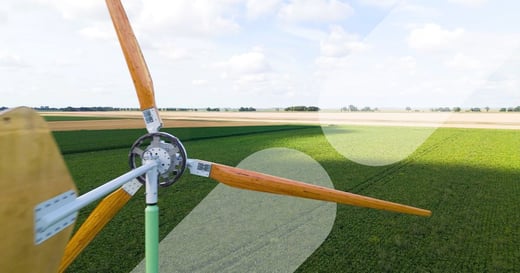
The EAZ-model windmill supplied by Ecoways has:
- A mast height of approximately 15 metres
- A maximum tip height of 21.6 metres
- A rotor diameter of 13.2 metres
- Wooden blades
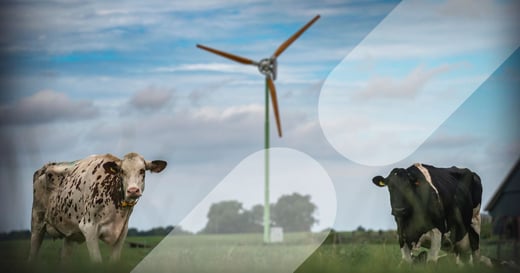
- A design intended to fit into the scale and appearance of the agricultural landscape.
It typically costs around €60,000-€100,000, depending on the location, installation, and project requirements. That puts it in a very different price category than a residential vertical-axis turbine, but it is also designed to cover a much more substantial share of a farm’s electricity demand.
| Further reading |
| Want a deeper look at how wind turbines work for farms? Read our complete guide to small windmills for agricultural businesses. >>> Read the guide |
Vertical-axis wind turbine vs. small agricultural windmill: the key differences
The easiest way to understand the difference is to put the two side by side.
| Vertical-axis wind turbine | Agricultural windmill | |
| Typical setting | Home, roof, or garden | Farm or business site |
| Size | Compact; model-dependent | EAZ: 15 m mast, 21.6 m tip height |
| Energy output | Usually relatively limited | Designed to make a meaningful contribution to business electricity demand |
| Indicative investment | Often around €2,500-€6,000 for a professionally installed residential system | EAZ-model typically around €60,000-€100,000 |
| Best suited to | Lower electricity demand / residential use | Higher and more consistent agricultural or commercial electricity demand |
| Space required | Relatively limited | Open space on or around the business site |
| Planning & permits | Depends on turbine size and local environmental plan | Requires detailed assessment of technical and local planning requirements |
When is a vertical-axis wind turbine the right fit?
A vertical-axis wind turbine is most relevant when you are looking for small-scale wind energy generation around a private home or other relatively low-consumption property.
You might consider one if:
- Your electricity demand is relatively modest
- You have limited space for a turbine
- You are specifically looking for a roof- or garden-mounted solution
- You want wind generation to complement existing solar panels
- Your location has enough usable wind to make a small turbine worthwhile
That last point is the one to verify.
Small residential turbines operate much closer to roofs, trees, and other buildings than an agricultural turbine in an open landscape. Those obstacles affect wind speed and create turbulent airflow, so the actual yield can vary enormously between locations. ANWB and Milieu Centraal both caution that small turbines at homes are often difficult to make financially attractive, particularly in built-up areas.
That said, if this smaller residential profile matches your situation, a specialist in home wind systems will be able to advise you better than Ecoways.
When is a small agricultural windmill the right fit?
A small agricultural windmill is the logical choice when wind energy needs to do more than provide a relatively small amount of additional household electricity.
It is designed for farms and businesses with a higher, more consistent electricity demand and enough space to generate energy on-site. A private household may use a few thousand kilowatt-hours of electricity over a year, while a farm can have everything from machinery and cooling to ventilation and milking equipment running day and night.
That not only creates a much higher electricity need, but also more opportunity to use locally generated wind power directly. An EAZ-model windmill can typically generate around 30,000-40,000 kWh per year, depending on the location and local wind conditions.
| Further reading |
| Think a small agricultural windmill could suit your farm? Read what to check before placing one on your property. >>> Read the blog |
That makes it a better fit for a much different energy profile than a vertical residential turbine. You should consider a small agricultural windmill when:
- Your annual electricity demand is relatively high
- A significant share of the generated power can be used directly on the farm
- You already have solar panels but still purchase substantial electricity from the grid
- You want to generate more electricity outside the main solar production hours
- Your farm has sufficient open space and suitable wind conditions
- Grid congestion is limiting your ability to expand your connection or energy system
The Ecoways Way |
| If the EAZ-model windmill looks like the right fit for your farm, Ecoways supports the project from the first feasibility check through to operation. We calculate the expected yield, prepare the business case, and check whether the location is suitable before you commit to the investment. From there, we guide the permit process, coordinate the installation, and help get the turbine operational. Once it is running, the system can be monitored so you can keep track of generation and performance over time. The aim is to make the process as clear as possible from the outset: what the turbine is expected to produce, what the project involves, and what you can realistically expect from it once installed. >>> More information on the EAZ-model windmill |
Frequently Asked Questions
What is a vertical-axis wind turbine?
A vertical-axis wind turbine has a rotor that turns around a vertical shaft rather than a horizontal one. In the Netherlands, these compact turbines are commonly referred to as windwokkels. They are often used for smaller-scale applications on or around homes and buildings.
What is the difference between a vertical-axis wind turbine and an agricultural windmill?
The main differences are size, output, and intended use. A vertical-axis wind turbine is generally a compact system for the relatively low electricity demand of private households. A windmill for agricultural use is a much larger small wind turbine designed to generate substantial amounts of electricity for an agricultural business.
How much does a vertical-axis wind turbine cost?
Prices vary considerably by size, power, and installation. As a rough indication, professionally installed residential vertical-axis systems commonly fall somewhere around €2,500-€6,000, although both cheaper and considerably more expensive products exist.
How much does the EAZ-model windmill by Ecoways cost?
An EAZ-model windmill typically costs between €60,000 and €100,000, depending on the location, configuration and installation requirements. In the Netherlands, eligible small wind turbines may also qualify for subsidy support, which can reduce the overall investment and should therefore be factored into the business case.
Can I put a vertical-axis wind turbine on my roof?
Potentially, but whether it is technically suitable and legally permitted depends on the turbine, your building, and the local rules. Roofs and surrounding buildings can also cause turbulent airflow, which can reduce energy generation. You should therefore assess both the expected yield and the applicable rules before installing one.
Can I install an EAZ-model windmill at my home?
The EAZ-model windmill by Ecoways is designed for agricultural and commercial applications, not ordinary residential properties. Its output, dimensions and investment are intended for locations with considerably higher electricity demand, while local planning policies for turbines of this scale are generally focused on agricultural and business sites.
The Takeaway
A vertical-axis wind turbine and a small agricultural windmill both use the same resource: wind. But they solve very different energy problems.
If you are looking to generate a relatively small amount of electricity at a private home and have limited space, a compact vertical-axis turbine may be the more logical category to explore.
If you run a farm or business with substantially higher electricity consumption, enough open space and a suitable location, a wind turbine for agricultural or commercial use can play a much bigger role in your energy supply.
At Ecoways, we would rather tell a homeowner that our windmills are not the right fit than try to force a solution that does not suit the site. The same rule applies to farmers: We start by reviewing your location, energy profile, and expected yield before recommending a turbine.
Because the right turbine for you is the one that matches the site, the wind conditions, and the energy demand.
Want to know whether a small agricultural windmill fits your business?
Ecoways can analyze your location to show you what is realistically possible.